Buy forumtrzeciegowieku.pl ?
We are moving the project
forumtrzeciegowieku.pl .
Are you interested in purchasing the domain
forumtrzeciegowieku.pl ?
domain@kv-gmbh.de · 0541-91531010
Buy forumtrzeciegowieku.pl ?
What is correct: peptide bond?
A peptide bond is a covalent bond that forms between the carboxyl group of one amino acid and the amino group of another amino acid during protein synthesis. This bond is formed through a condensation reaction, where a molecule of water is removed. The resulting bond is a strong and stable linkage that holds the amino acids together in a protein chain. Therefore, the correct term is "peptide bond" to describe this specific type of covalent bond between amino acids. **
What is the bond angle in a peptide bond?
The bond angle in a peptide bond is approximately 120 degrees. This angle is due to the partial double bond character of the peptide bond, which is formed between the carbonyl carbon of one amino acid and the nitrogen of another amino acid. The resonance structure of the peptide bond results in a planar arrangement of the atoms, leading to the bond angle of approximately 120 degrees. **


Similar search terms for Peptide bond
Top-Angebote
Products related to Peptide bond:
-
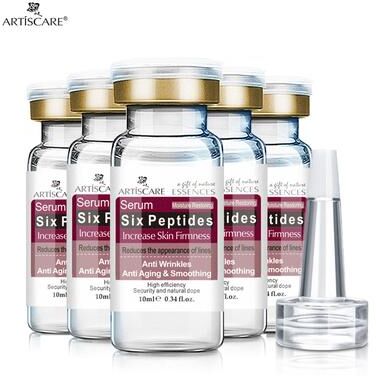
Youfap Market Peptide Face Serum For Hydration And Anti Aging, Moisturizing Facial Essence Peptide Face Serum For Hydration And Anti Aging, Moisturizing Facial EssenceRevitalize your skin with our 5 pcs Peptide Face Serum, an essential facial essence designed to moisturize and fight multiple signs of aging. Ideal for all skin types, this serum is infused with six powerful peptides that target fine lines,...69,97 $*Shipping: 0,00 $Secure redirect to the provider
-
Uplift Picks RevitaGlow Collagen Eye Cream Anti Aging Peptide Treatment For Dark Circles RevitaGlow Collagen Eye Cream Anti Aging Peptide Treatment For Dark CirclesWake up to brighter, smoother eyes with this nourishing collagen eye cream designed to refresh tiredlooking skin. Perfect for anyone dealing with fine lines, puffiness, or dullness, this anti aging eye cream helps restore a youthful appearance....46,00 $*Shipping: 0,00 $Secure redirect to the provider
-
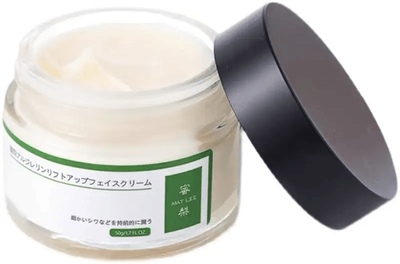
Inspire Essentials Japanese Peptide Face Cream Anti Aging Moisturizer For Firming And Sensitive Skin Japanese Peptide Face Cream Anti Aging Moisturizer For Firming And Sensitive SkinNourish your skin with the power of advanced peptides. The Japanese Peptide Face Cream is formulated to firm, tighten, and deeply hydrate, helping to reduce the early signs of aging while keeping skin smooth and radiant. Enriched with six active...40,50 $*Shipping: 0,00 $Secure redirect to the provider


-
What is the difference between a peptide bond and an ester bond?
A peptide bond is a covalent bond formed between the carboxyl group of one amino acid and the amino group of another amino acid, linking them together in a protein chain. On the other hand, an ester bond is a covalent bond formed between a carboxylic acid and an alcohol, resulting in the formation of an ester molecule. Peptide bonds are specific to proteins, while ester bonds are commonly found in lipids, such as fats and oils. Additionally, peptide bonds are involved in the primary structure of proteins, determining their sequence, while ester bonds are important for the structure and function of lipids. **
-
What are the differences between a glycosidic bond, a peptide bond, and an ester bond?
Glycosidic bonds are formed between a sugar molecule and another molecule, such as another sugar or a non-carbohydrate compound. Peptide bonds are specific types of covalent bonds that link amino acids together in proteins. Ester bonds are formed between a carboxylic acid and an alcohol, resulting in the formation of an ester. Each of these bonds plays a crucial role in the structure and function of biological molecules, with glycosidic bonds being important in carbohydrates, peptide bonds in proteins, and ester bonds in lipids. **
-
Can you explain the formation of a peptide bond?
A peptide bond is formed through a condensation reaction between the carboxyl group of one amino acid and the amino group of another amino acid. During this reaction, a molecule of water is released. The carbon atom of the carboxyl group forms a covalent bond with the nitrogen atom of the amino group, resulting in the formation of a peptide bond. This process is catalyzed by enzymes called ribosomes. Multiple peptide bonds can be formed between amino acids to create a polypeptide chain. **
-
How is the formation of a peptide bond carried out?
The formation of a peptide bond is carried out through a condensation reaction between the carboxyl group of one amino acid and the amino group of another amino acid. During this process, a molecule of water is removed, and the two amino acids are joined together by a covalent bond, forming a dipeptide. This reaction is catalyzed by an enzyme called peptidyl transferase, which is found in the ribosome. The newly formed peptide bond is essential for the synthesis of proteins and plays a crucial role in the structure and function of biological molecules. **


What is a peptide bond, peptide chain, peptide group, di-, tri-, and polypeptide? Can you please explain this briefly and simply? Thank you.
A peptide bond is a chemical bond that forms between the carboxyl group of one amino acid and the amino group of another amino acid. When multiple amino acids are linked together by peptide bonds, they form a peptide chain. A peptide group refers to a group of amino acids linked together by peptide bonds. A dipeptide is a chain of two amino acids, a tripeptide has three amino acids, and a polypeptide is a chain of many amino acids linked together. These chains of amino acids are the building blocks of proteins. **
How can I recognize in this peptide bond that it consists of two amino acids?
In a peptide bond, two amino acids are joined together through a condensation reaction between the carboxyl group of one amino acid and the amino group of another amino acid. This results in the formation of a covalent bond between the carbon atom of the carboxyl group and the nitrogen atom of the amino group. The presence of this specific bond between the two amino acids is a characteristic feature of a peptide bond, allowing us to recognize that it consists of two amino acids. **
Top-Angebote
Products related to Peptide bond:
-
Skinlick Peptide Gloss Bond Repair Mask Deep Repair 150mLA hair mask. Peptide Gloss Bond Repair Mask is designed to transform dry, damaged, chemically treated, or heat-stressed hair into silky, healthy locks. This advanced hair mask utilizes bonding technology, biomimetic peptides, and hydrolyzed rice protein to deeply repair and restore hair structure, enhancing shine and smoothness.13,71 £*Shipping: 5,22 £Secure redirect to the provider
-
All Categories Goods Firming Peptide Eye Cream Matrixyl & Hyaluronic Acid For Anti Aging Firming Peptide Eye Cream Matrixyl & Hyaluronic Acid For Anti AgingSay goodbye to tired, aging eyes and hello to revitalized, youthful skin with our Firming Peptide Eye Cream. Specially formulated with Matrixyl 3000 and Hyaluronic Acid, this powerhouse eye cream targets fine lines, puffiness, and dark circles for...47,97 $*Shipping: 0,00 $Secure redirect to the provider
-
Youfap Market Peptide Face Serum For Hydration And Anti Aging, Moisturizing Facial Essence Peptide Face Serum For Hydration And Anti Aging, Moisturizing Facial EssenceRevitalize your skin with our 5 pcs Peptide Face Serum, an essential facial essence designed to moisturize and fight multiple signs of aging. Ideal for all skin types, this serum is infused with six powerful peptides that target fine lines,...69,97 $*Shipping: 0,00 $Secure redirect to the provider
-
Uplift Picks RevitaGlow Collagen Eye Cream Anti Aging Peptide Treatment For Dark Circles RevitaGlow Collagen Eye Cream Anti Aging Peptide Treatment For Dark CirclesWake up to brighter, smoother eyes with this nourishing collagen eye cream designed to refresh tiredlooking skin. Perfect for anyone dealing with fine lines, puffiness, or dullness, this anti aging eye cream helps restore a youthful appearance....46,00 $*Shipping: 0,00 $Secure redirect to the provider
-
What is correct: peptide bond?
A peptide bond is a covalent bond that forms between the carboxyl group of one amino acid and the amino group of another amino acid during protein synthesis. This bond is formed through a condensation reaction, where a molecule of water is removed. The resulting bond is a strong and stable linkage that holds the amino acids together in a protein chain. Therefore, the correct term is "peptide bond" to describe this specific type of covalent bond between amino acids. **
-
What is the bond angle in a peptide bond?
The bond angle in a peptide bond is approximately 120 degrees. This angle is due to the partial double bond character of the peptide bond, which is formed between the carbonyl carbon of one amino acid and the nitrogen of another amino acid. The resonance structure of the peptide bond results in a planar arrangement of the atoms, leading to the bond angle of approximately 120 degrees. **
-
What is the difference between a peptide bond and an ester bond?
A peptide bond is a covalent bond formed between the carboxyl group of one amino acid and the amino group of another amino acid, linking them together in a protein chain. On the other hand, an ester bond is a covalent bond formed between a carboxylic acid and an alcohol, resulting in the formation of an ester molecule. Peptide bonds are specific to proteins, while ester bonds are commonly found in lipids, such as fats and oils. Additionally, peptide bonds are involved in the primary structure of proteins, determining their sequence, while ester bonds are important for the structure and function of lipids. **
-
What are the differences between a glycosidic bond, a peptide bond, and an ester bond?
Glycosidic bonds are formed between a sugar molecule and another molecule, such as another sugar or a non-carbohydrate compound. Peptide bonds are specific types of covalent bonds that link amino acids together in proteins. Ester bonds are formed between a carboxylic acid and an alcohol, resulting in the formation of an ester. Each of these bonds plays a crucial role in the structure and function of biological molecules, with glycosidic bonds being important in carbohydrates, peptide bonds in proteins, and ester bonds in lipids. **
Similar search terms for Peptide bond
-
Inspire Essentials Japanese Peptide Face Cream Anti Aging Moisturizer For Firming And Sensitive Skin Japanese Peptide Face Cream Anti Aging Moisturizer For Firming And Sensitive SkinNourish your skin with the power of advanced peptides. The Japanese Peptide Face Cream is formulated to firm, tighten, and deeply hydrate, helping to reduce the early signs of aging while keeping skin smooth and radiant. Enriched with six active...40,50 $*Shipping: 0,00 $Secure redirect to the provider
-
Alterna Haircare Caviar Anti-Aging Bond Repair Mask 487 mlHealth and Beauty Masks Alterna Haircare Caviar Anti-Aging Bond Repair Mask 487 ml This weekly conditioning hair mask with Caviar Bond Enforcing Technology helps deliver intense hydrating and restorative benefits to hair. A rich hydrating blend helps repair breakage and restore the healthiest look and feel of hair. Caviar Restructuring Bond Repair Mask is created to smooth the cuticle, add moisture, and increase elasticity and shine. Hair is left feeling and looking healthy, supple and radiant. Complete a weekly grooming routine perfect for damaged and brittle hair.48,86 £*Shipping: 3,99 £Secure redirect to the provider
-
Trendy Discount Goods Anti Aging Snake Venom Peptide Caffeine Eye Cream Anti Wrinkle Dark Circles Care Anti Aging Snake Venom Peptide Caffeine Eye Cream Anti Wrinkle Dark Circles CareRejuvenate Your Eyes with Advanced AntiAging Technology Say goodbye to fine lines, wrinkles, and dark circles with our Snake Venom Peptide Eye Cream. This powerful eye treatment combines the best of nature and science to hydrate, nourish, and...32,97 $*Shipping: 0,00 $Secure redirect to the provider
-
Can you explain the formation of a peptide bond?
A peptide bond is formed through a condensation reaction between the carboxyl group of one amino acid and the amino group of another amino acid. During this reaction, a molecule of water is released. The carbon atom of the carboxyl group forms a covalent bond with the nitrogen atom of the amino group, resulting in the formation of a peptide bond. This process is catalyzed by enzymes called ribosomes. Multiple peptide bonds can be formed between amino acids to create a polypeptide chain. **
-
How is the formation of a peptide bond carried out?
The formation of a peptide bond is carried out through a condensation reaction between the carboxyl group of one amino acid and the amino group of another amino acid. During this process, a molecule of water is removed, and the two amino acids are joined together by a covalent bond, forming a dipeptide. This reaction is catalyzed by an enzyme called peptidyl transferase, which is found in the ribosome. The newly formed peptide bond is essential for the synthesis of proteins and plays a crucial role in the structure and function of biological molecules. **
-
What is a peptide bond, peptide chain, peptide group, di-, tri-, and polypeptide? Can you please explain this briefly and simply? Thank you.
A peptide bond is a chemical bond that forms between the carboxyl group of one amino acid and the amino group of another amino acid. When multiple amino acids are linked together by peptide bonds, they form a peptide chain. A peptide group refers to a group of amino acids linked together by peptide bonds. A dipeptide is a chain of two amino acids, a tripeptide has three amino acids, and a polypeptide is a chain of many amino acids linked together. These chains of amino acids are the building blocks of proteins. **
-
How can I recognize in this peptide bond that it consists of two amino acids?
In a peptide bond, two amino acids are joined together through a condensation reaction between the carboxyl group of one amino acid and the amino group of another amino acid. This results in the formation of a covalent bond between the carbon atom of the carboxyl group and the nitrogen atom of the amino group. The presence of this specific bond between the two amino acids is a characteristic feature of a peptide bond, allowing us to recognize that it consists of two amino acids. **
* All prices are inclusive of VAT and, if applicable, plus shipping costs. The offer information is based on the details provided by the respective shop and is updated through automated processes. Real-time updates do not occur, so deviations can occur in individual cases. ** Note: Parts of this content were created by AI.